6 Things You Need to Know About PCOS
By Nutritionist and Hormone Expert Sarah Gale
September marks PCOS Awareness Month and it's fair to say PCOS has been having a moment this year. In fact, I should really say PMOS Awareness Month, but more on that shortly.
PCOS is estimated to affect one on ten women and can cause a wide range of symptoms, including irregular or absent periods, acne, excess hair growth, weight gain and hair thinning. However, none of these symptoms are really reflected in the name polycystic ovary syndrome, which focuses purely on the ovaries.
This year, that finally shifted, which leads nicely into the first thing you need to know about PCOS right now.

1. It's Just Had A Name Upgrade
PCOS has had a shiny new name upgrade and about time too. In May 2026, PCOS was officially renamed PMOS (polyendocrine metabolic ovarian syndrome) following a large global consensus process involving over 14,300 people with the condition and health professionals worldwide.
The new name helps frame the mechanisms actually at play in PCOS, because the condition was never really about cysts. The old name (polycystic ovary syndrome) made it sound like there were multiple cysts sitting on the ovaries. But what shows up on a scan isn't cysts at all, it's small, normal, immature follicles. Researchers say the misleading old name has contributed to diagnostic delays for as many as 7 in 10 women with the condition.
The new name also reflects that PCOS is a whole-body condition, one that impacts multiple hormones, metabolism and ovulation (not just what's happening in the ovaries). It's rolling out gradually over the next few years and my guess is the two names will be used interchangeably alongside each other for a good while yet.
2. There's A Minimum Age Before It Should Be Diagnosed
One of the diagnostic criteria for PCOS is irregular cycles. Under what's called the Rotterdam criteria, a diagnosis requires two of three things to be present: irregular or absent ovulation, signs of excess androgens (whether on a blood test or physical symptoms, such as acne or extra hair growth) or multiple “cysts” found on the ovaries, sometimes termed as a string of pearls.
Unfortunately, many teenagers have been diagnosed with PCOS, perhaps incorrectly. Within the first year or two after periods start it's completely normal for cycle lengths to vary quite widely in length (sometimes 60 days or more between periods). This is simply because it can take some time for regular ovulation to become established.
Current guidelines state that scans shouldn't be used to diagnose PCOS within 8 years of a first period and teenagers need to show both irregular ovulation and physical signs of excess hormones (such as acne or extra hair growth) before a diagnosis should even be considered.

3. Insulin Resistance (Most Likely) Plays A Starring Role
Insulin resistance is when your cells stop responding properly to insulin, the hormone that moves sugar out of your bloodstream and into your cells for energy. In insulin resistance your pancreas compensates by pumping out more and more insulin to get the same effect and it's this excess insulin that causes so many problems in PCOS.
Somewhere between a third and 80% of women with PCOS have some degree of insulin resistance and it can become a bit of a vicious cycle. Extra insulin encourages the ovaries to produce more male hormones (androgens) which then leaves more active testosterone circulating in your bloodstream. That in turn then encourages more inflammation and weight gain around the middle, which makes insulin resistance worse.
If insulin resistance is left unsupported it can contribute to sugar or carb cravings, energy crashes, weight gain (particularly around the middle) and difficulty losing weight no matter how hard you try. Because it sits at the root of so many PCOS symptoms, balancing blood sugar is often the single most foundational place to start when managing this condition.
4. Other Causes Of High Androgens Should Be Ruled Out First
PCOS is best defined as the presence of androgen excess, but only once every other explanation for that excess has genuinely been ruled out. High androgens can show up on a blood test or as physical symptoms such as acne, excess facial or body hair or hair thinning at the temples.
In PCOS itself, the mechanism is usually a mix of excess insulin and a hormone called LH (luteinising hormone) driving the ovaries to produce more testosterone than they should. But several other conditions can cause the exact same picture and need to be ruled out first. This includes a temporary rebound surge in androgens after coming off certain contraceptive pills, the genetic condition congenital adrenal hyperplasia (CAH) and high prolactin levels. Only once these have been excluded should androgen excess be used to help confirm a PCOS diagnosis.

5. PCOS Can Be A Genetic Condition (but diet and lifestyle can make a big impact)
PCOS does have a genetic thread running through it. Research has linked the condition to genes involved in hormone signalling, insulin regulation and how the ovaries produce hormones, which is part of why it tends to run in families. If your mum, sister or aunt has PCOS you're statistically more likely to have it too.
As someone who has PCOS myself, I fully understand how the condition can contribute to so many symptoms, some of which can feel completely out of your control. But the positive news is that diet and lifestyle can make a huge difference to how your symptoms show up and can drastically improve your quality of life. There's no single "PCOS diet" that beats all the others, what matters far more is finding sustainable healthy habits you can actually stick to. PCOS is a chronic condition, so realistically these are habits you'll need to keep up for the long haul, not just as a quick six-week fix.
6. It May Begin Before You're Even Born
One of the more surprising areas of PCOS research is how it may develop before you are even born. In the womb, a developing baby is highly sensitive to outside influences and if a pregnant woman is exposed to certain environmental chemicals, those substances can cross the placenta and disrupt the baby's developing reproductive and metabolic systems. Some researchers believe this can create a hormonal imbalance that "primes" a female fetus for PCOS traits later in life, including excess androgens and insulin resistance.
PCOS looks different for almost everyone who has it and this year’s name change is a good reminder that the research is still very much a work in progress. However, understanding what's actually driving your symptoms in PCOS is the first step towards getting the right support and making changes that genuinely help. Reach out to Sarah if you would like help to get to the root of your symptoms and build a plan that actually works for your body.
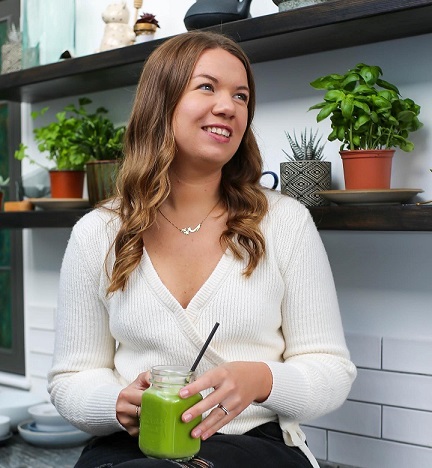
Meet Sarah...
Sarah is our local go-to nutrition and hormone expert. She helps women understand what's actually going on with their hormones and make small, doable food and lifestyle tweaks so they can stop feeling rubbish in their body and dreading their period every month.
After years of being told her symptoms were "normal" (and before finally being diagnosed with PCOS and Hashimoto's) Sarah trained as a Registered Nutritional Therapist and got her health back for good. She's now passionate about helping women get to the root of their symptoms and feel like themselves again, without restriction or overwhelm.
We are delighted to share Sarah's expert knowledge with you through regular articles, which shine a light on everyday issues and offer accessible ways to tackle them.
Sarah is a Registered Nutritional Therapist (MSc), DipION, mBANT, CNHC and founder of Sarah Gale Nutrition. You can find out more about Sarah and the services she offers over at Sarah Gale Nutrition or follow her on Instagram @the_hormone_nutrition.

Get content on wellbeing and local life straight to your inbox
We think you'll like these articles too...

LIVE LIFE WELL. LOVE LOCAL. LOVE THE LIST.
LIVE LIFE WELL.
LOVE LOCAL.
LOVE THE LIST.
Get content on wellbeing and local life straight to your inbox
© 2026 The List Limited. All Rights Reserved.